
Health Team and Ambulance Safety in Film and Series Sets
The importance and planning steps of having a health team and ambulance for actor and crew safety in film and series sets.
💡Key Takeaways
- Set Risks: Be prepared for falls, burns, fatigue, and effect accidents.
- Ambulance Requirement: Mandatory for remote locations and risky scenes.
- Planning: Determine risky scenes and the nearest hospital in advance.
- Actor Safety: Do warm-up exercises and use protective equipment.
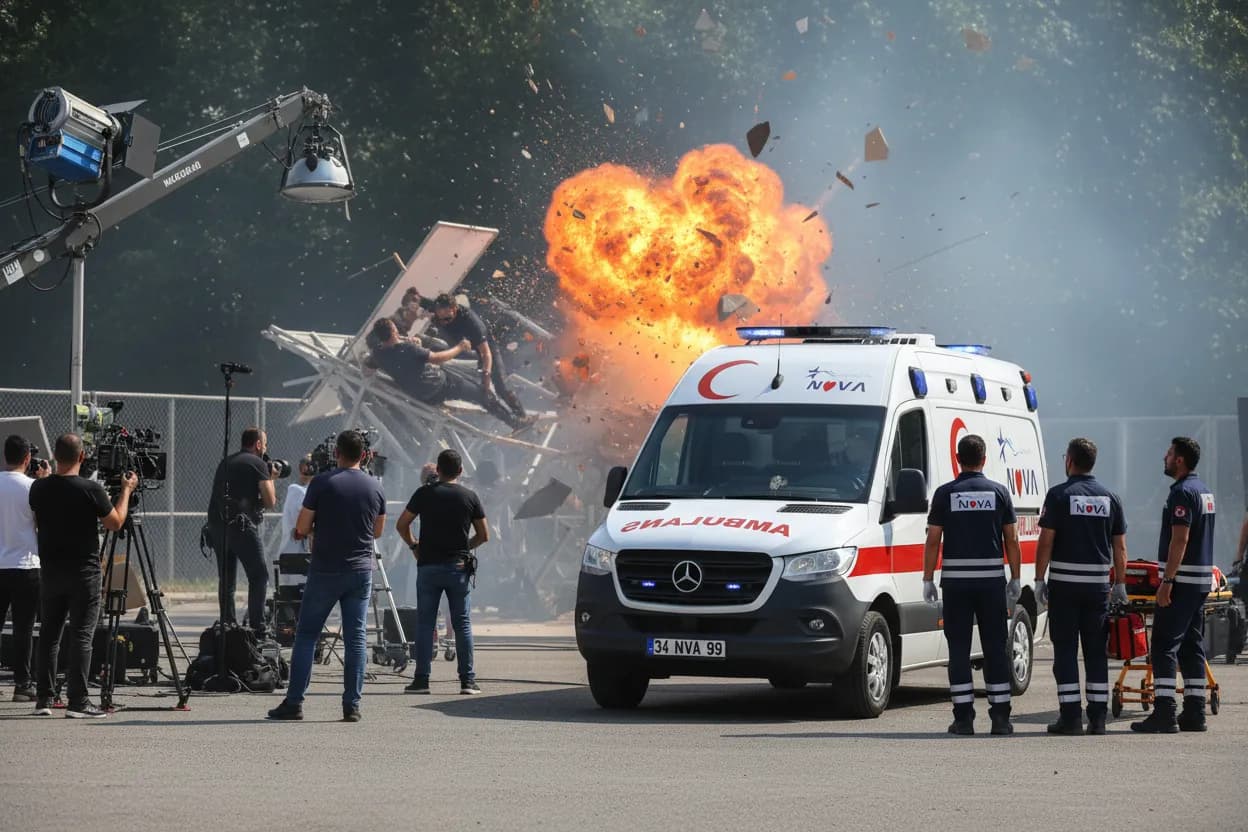
Although film and series shoots offer a fascinating atmosphere when viewed from the outside, they contain intense tempo, long working hours, and physical risks behind the scenes. Scenes falling from heights, vehicle shoots, crowded figuration use, and explosive effects; can make sets risky in terms of health. In this article, we discuss why having a health team and ambulance in film and series shoots is vital.
Health Risks Encountered in Set Environment
Every set is different; however, frequently seen risks show similarities:
- Traumas like falls, sprains, fractures
- Fainting, low blood pressure, rhythm disturbances due to long working hours
- Respiratory problems due to smoke, dust, and chemical effects
- Heatstroke and dehydration in shoots under high heat
In this picture, a health team waiting ready at the scene is essential for both immediate intervention and correct transport planning.
Why Should Ambulance and Health Team Be Mandatory?
The logic of "there is a hospital nearby anyway" is risky in sets. The following points should not be forgotten:
- Delays in traffic, distance, and address description in emergencies waste seconds.
- Set areas can often be outside the city, plateaus, or hard-to-reach regions.
- A professional ambulance team performs the first intervention at the scene and transports the patient to the appropriate hospital after stabilizing them.
Therefore, keeping a fully equipped emergency ambulance and experienced team is the most correct approach, especially in projects containing risky scenes.
Points to Consider in Pre-Set Health Planning
Producers and set managers need to answer these questions:
- Are there high-risk scenes (fight, vehicle chase, explosion, etc.) in the daily shooting plan?
- Is the ambulance entry-exit route to the shooting area clear?
- Are there people with chronic diseases or special conditions among the actors and crew?
- Have nearby hospitals and emergency services been determined in advance?
This information helps professional teams like Nova Ambulans analyze risks correctly and suggest appropriate solutions.
Short Health Guide for Set Crew and Actors
There are some simple rules everyone should pay attention to for shoots to proceed more safely:
- Consume water regularly on long shooting days, avoid heavy and fatty foods.
- Definitely do warm-up exercises before scenes requiring warm-up (running, fight, dance).
- Report the situation immediately to the manager and health team when you do not feel well.
- Do not remove safety equipment (belt, helmet, knee pad, etc.) because "it is not visible"; scene design should be planned according to this equipment.
A professional set is measured not only by image and content quality but also by the value it gives to human life. Planning the health team and ambulance from the beginning in your film and series projects minimizes potential risks and gives confidence to the whole team. Nova Ambulans offers health and ambulance solutions suitable for needs for sets of different scales.
Frequently Asked Questions
In what kind of scenes should an ambulance definitely be kept?
It is especially critical to keep an ambulance and health team in scenes containing falling from height, vehicle chase, crowded war/crowd plan, explosion, or intense physical effort. Since it is known that the risk increases in these scenes, a detailed health plan must be made in advance.
How long in advance should we make the ambulance reservation for the set?
Especially in large productions, it is ideal to make a reservation at least a few days, if possible a week before shooting starts. Thus, the appropriate vehicle and team combination for high-risk days in the shooting plan can be guaranteed.
Can the ambulance team undertake both on-set first aid and external transfers at the same time?
In an emergency, priority is determined according to the medical need at that moment; therefore, it is healthiest to choose a team dedicated only to this project for set safety. In case of need, planning a second ambulance or support team protects both the set flow and health safety.